วันพุธที่ 26 กันยายน พ.ศ. 2561

Week 7 : Corpus for Classrooms : Ideas for Material Design

Corpus for Classrooms : Ideas for Material Design

In this paper, the researchers will quide the readers on how corpora can help students understand how contain language forms are used by native speakers of English, They will give a briefly review on studies discussing the benefits and the challenges of using corpus in language learning. The researcher will then go through some corpus-based materials and activities suitable for different language levels.

In the first part of the paper is a brief review of literature that mainly aims at showing how other researchers went about using corpora in their language classrooms and how effective that was. The researchers also point out other elements that affect the use of corpus such as the role of the teacher and the challenges that face both students and teachers when using corpora.

As for the second part of the paper, the researchers present a number of ideas for planning corpus-based activities. Those activities are tailored so that they meet the different language abilities of students in L2 classroom. The researchers will demonstrate how vocabulary, grammar, idiomatic expressions and pragmatic constraints could be covered in EFL classroom using corpus-based resources.

Corpus-based Activities and Idea for Material Design
Elementary
- Verb pairing
- Computer cloze activity
- Screen shot analysis
Intermediate students : Modal verbs
- Contextual Analysis
- Cloze activities
- Spot the error activity
- Express yourself
Upper intermediate student : Phrasal Verb
- Cloze activity
Advanced students : Idiomatic Analysis
- Concordance Analysis
- Pragmatics : Situation analysis


          Although using corpora in language teaching is challenging, it has a big potential in EFL classrooms. If teachers are trained on how to design suitable corpus-base tasks, they can help their students get exposed to a broader framework of how English is used for communication by native speaker. Certain points to bear in mind while designing corpus-base tasks include the ability level of the student, cultural and educational backgrounds and the age group of the students. It is also recommended to use online corpora as they are available for anybody at any given time. In class a specialized corpus is needed, EFL instructors and researchers next plan is to examine some of the activities listed above using a more in-depth approach to highlight the benefits, challenges and drawbacks of each.

วันอาทิตย์ที่ 23 กันยายน พ.ศ. 2561

Week 6 : Modal Auxiliary In British English : A Corpus-Based Study Of Modality Through British Nation Corpus

Modal Auxiliary In British English : A Corpus-Based Study Of Modality Through British Nation Corpus


BNC web is a useful device to explore practical usage in English language. Besides common grammatical knowledge, collates can give new insight and broaden our point of view.


The British National Corpus contains approximately 100 million words and it is constructed by collection of various types of written British English of the late twentieth century for 90 percent and of different types of spoken data for 10 percent. BNC is deemed as representative sample of practical usage in contemporary English language.

The corpus has been finally developed into a web-based program which researchers can retrieve lexical grammatical and textual data for word in which they are interested.

In this paper three modal verbs('must', 'should' and 'have to') will be investigated through the British National Corpus web-based program to illicit their grammatical differences and usage in English.

Modal verbs (must should' and have to') have been explained in theoretical usage in many textbooks and sometimes each one exemplified by unrealistic examples. Through application of BNC web, collocates can elucidate unforeseen patterns that co-occur with each model verb and this will assist, at least English teachers to give realistic examples to their students from the top list of collocates. However, the top list is flexible due to, firstly, a span of words in left and right position and Secondly, statistical methods were to change to other values. Although the differences might be diminutive, othe investigation is still appealing as it may enrich our point of view in modalities.

Week 5 : Using corpus analysis software to analyse specialised texts

Using corpus analysis software to analyse specialised texts


1. What is a corpus?
In corpus linguistics, a corpus (sometimes used in the plural form 'corpora') can be generally defined as...'a collection of naturally-occurring texts in a computer-readable format which can be retrieved and analyzed using corpus analysis software

2. Sources of language corpora
Subscribe to a large corpus provider such as the British National Corpus (BNC) http://www.natcorp.ox.ac.uk/
Use web concordancing
- http://corpus.leeds.ac.uk/protected/query.html (general corpus; English)
- http://corpus.byu.edu/ (general corpus; American/British English)
- http://lextutor.ca/conc/eng/ (general and specialized corpora; English)
- http://www.arts.chula.ac.th/~ling/TNCII/ (general corpus; Thai)
-http://www.arts.chula.ac.th/~ling/ParaConc/index.html (English-Thai parallel concordance)
• Compile own corpora and analyse data using corpus analysis software - Antconc'(http://www.antlab.sci.waseda.ac.jp/software.html) (for monolingual corpus) - Wordsmith' (http://www.lexically.net/wordsmith/) (for monolingual corpus) - 'Paraconc' (http://www.athel.com/para.html) (for multilingual corpora)

3. Designing a specialized corpus
Corpus size
• There are no fixed rules; depending on research purposes, availability of data and time.
Large, general corpora may be less useful than small, focused corpora if searches are made on context-specific terms.
There are limitations of 'too small' corpora e.g. not enough hits to make decent generalization, not covering enough concepts, terms, or patterns under investigation.
It is preferable to create a 'monitor' or 'open' corpus because specialized words/usage are dynamic

Text extracts vs. full texts
• Depends on the aim of corpus compilation.
• Whole text offers more coverage because words or terms to be looked at may be randomly
distributed throughout the text.
• Specific sections may be helpful if we are looking for words or phrases under particular
content areas or want to create purposeful sub-corpora.

Number of texts
Choices can be made between collect few texts of large size or a number of texts with smaller sizes. Choices can also be made between selecting texts written by one or two key writers or sources, or texts retrieved from different sources or written by different authors.
Depends on your research focus e.g. to study overall language use or to study linguistic choices preferred by particular writers.

Medium
Can be spoken or written texts or mixed.
Depends on research questions.
Some practical factors should also be considered e.g. compiling spoken corpora can be when consuming and needs special types of tagging (= giving codes to the data c.8. curang, paralinguistic features)

Subject and text type
Should mainly focus on the specialized text under investigation, although this is less clear-cut
in multidisciplinary subjects.
Texts may come from different subjects if the research focus is on the study of particular language features rather than term extraction.
Text types within a specialized subject field may vary from "expert-to-expert' texts to 'expert-to-non-expert' texts, or in other words, from technical to popular texts.
Other considerations
Authorship: Texts written by experts in a field tend to present more reliable and authentic examples of specialised language.
Language: Specialised texts can be stored and retrieved in the form of monolingual. comparable, or parallel corpora.
Publication date: Texts should come from recent publications unless queries are made in relation to particular periods of time.

4. Sources of specialized texts
Printed materials (must be converted to text files using a scanner with good OCR (Ontin Character Recognition) software.
Word document texts (must be converted to text files e.g. using 'save as' or cut and texts in Notepad) CD-ROMs (must be converted to text files)
Texts on the Web (must be converted to text files and/or have the html mark-ups remove
Online databases (must convert word documents or pdf documents into text files)

5. Getting started with Antconc
Download the latest version of Antconc and watch YouTube tutorials from http://www.antlab.sci.waseda.ac.jp/antconc index.html)


6. Creating a specialised corpus profile
A sample profile


วันพุธที่ 19 กันยายน พ.ศ. 2561

Week 4 : Science and technology multiply around us. To an increasing extent they dictate the languages in which we speak and think. Either we use those languages, or we remain mute.

Science and technology multiply around us. To an increasing extent they dictate the languages in which we speak and think. Either we use those languages, or we remain mute.


1. What are the problems struggling writers have in writing classes?

    Struggling writers are often less motivated to write and fails to organize their ideas. These learners usually have poor handwriting and writes slowly or illegibly. They also have problems in expressing their idea through composition and have trouble communicating and understanding their teacher. Additionally, they are a lack of confidence in producing text and insecure feeling about showing their writing to others, in particular to their peers. These problems will be worse when learners have to write in languages other than their native language such as in EFL classes.


2. What does 'digital writing' refer to?
    Digital writing refer to standard way of life for young learners within Generation M.

3. What are the three digital writing tools? Give brief descriptions?
   3.1 Blogs is a discussion, informational article or personal journal, published on the World Wide Web, which is often frequently update.
   3.2 Instant Messaging (IM) - MSN, Line, Twitter, Skype, chat-room is a form of Internet-based, real time text communication between users on the same system.
   3.3 Social Network Site (SNS) is a website or an online service platform in which interest, create a public or semi-public profile, and interact with other users.

4. How has digital writing enhanced the teaching of writing?
  1. They provide opportunities for users to use nicknames or pseudonyms.

  2. Learners actually type out what they want to communicate to the group or readers.
  3. The anonymity feature of digital writing enhances a peer feedback activity as students feel less threatened and less pressured when giving or receiving feedback.
  4. digital writing promotes learners' equity in terms of interaction.

  5. Increases student-centered learning.

  6. Encourages collaborative learning

 7. digital writing involves different modes of representation combining text, audio, video, still images, animation, and/or interactive features.

5. What are the things that you should take into consideration to employ digital writing for teaching academic writing?
    Many English teachers are still concerned that its specific register such as shorthand and emoticons may yield negative impact to many teen users. In additionEnglish teachers and scholars are worried that these easy-to use symbolic abbreviations will likely deconstruct verifiable grammatical rules.

6. Which activity do you like most? Why?

I like Role Play because this activity allows students to enjoy both fun and learning at the same time. They have to imagine and create situations as well as play a role in the show and also practice speaking and courage.

วันเสาร์ที่ 28 กรกฎาคม พ.ศ. 2561

Week 3 : The Use of Multimedia in English Teaching ZHANG Zhen

The Use of Multimedia in English Teaching ZHANG Zhen


What is multimedia?

          Multimedia is the field concerned with the computer-controlled integration of text, graphics, drawings, still and moving images (Video), animation, audio, and any other media where every type of information can be represented, stored, transmitted and processed digitally.

The Definition of multimedia

      The use of computers to present text, graphics, video, animation, and sound in an integrated way.


The use of multimedia in English teaching

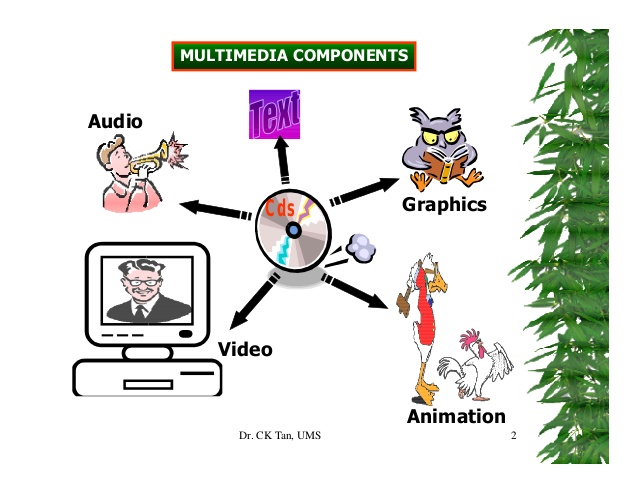
Components of Multimedia

      Text  ➤  It is fundamental element in all multimedia applications. 
      Graphics  ➤  It refers to images and pictures, such as chart, diagram, and photograph, which contain no movement.
      Animation  ➤  It is The rapid display of a sequence of images of 2-D or 3-D artwork or model positions in order to create an illusion of movement.
      Sound  ➤  It is speech, music, or any other sound that is stored and produced by computers. It has more advantages than tape recorder.
      Video  ➤  It is the visible part of a television transmission and broadcasts visual images of stationary or moving objects.


The Setting of Multimedia Classroom 

      (1) MPC—multimedia personal computer; 
      (2) VCD/DVD player—video compound disk/digital video disk; 
      (3) Amplifier and Hi-Fi acoustic system; 
      (4) Overhead/slide projector; 
      (5) Screen/curtain; 
      (6) Projecting apparatus; 
      (7) The Internet access; 
      (8) Cassette tape recorder; 
      (9) Camera recorder.


 The Necessity of Multimedia in English Teaching

The Necessity of Development of Modern Educational Technology
        Modern educational technology, which is characterized by more information and stronger intuitive, is a combination of modern education and modern technology.
The Needs of Quality Education 
        The answer is that multimedia is one of the ways to promote the development of quality education. Multimedia English language teaching can enable students to be involved in a variety of sensory organ in the learning process and stimulate the students in the corresponding cortical function area.
The Needs of Students’ Cognitive Mental
        Cognitive psychology studies have shown that 94% of the information learned through the visual and auditory access, of which 88% is obtained through the vision, 12% through hearing.


The Multimedia Teaching 

Advantages

       Arousing the students’ interest.
       Famous scientist Albert Einstein had a famous saying: “Interest is the best teacher”. So the interest has always been seen as the best helper to learn the knowledge.
       Improving students’ self-learning ability.
       The most important thing is teaching students how to learn and making students change from “want me to study” to “I want to learn” in thinking, from passive learning to active learning.
       Improving students’ innovative ability. 
       Meanwhile, multi-media teaching can also develop student’s ability to innovate. Things need to innovate, Einstein said: “Imagination is more important than knowledge, and is a source of knowledge”.
       Cultivating students’ communication skills. 
       Through multi-media teaching, we can create real-life scenes in the classroom. It is not only to shorten the distance between teaching and practice and give students the opportunity to use English to communicate.
       Increasing classroom capacity.
       The use of multimedia technologies can make students notice a clear knowledge and a new expansion by huge information capacity which shows by all kinds of media.

Problems

       Confusion  ⟹  Some English classes are totally dependent on multi-media, ignoring the role of teachers.  What is worse, some teachers have directly brought a CD-ROM courseware for their lessons, or copy other people’s courseware overall.
      Performance on behalf of the lead  ⟹   the teachers use the multi-media presentation to replace the guidance of teachers completely.
      Lack of special skill  ⟹  There are many multimedia teachers who just have half-baked knowledge. The preparation and workload of teachers increase virtually. And multimedia teaching requires teachers with multimedia computer operation experience. Owing to traditional educational system, many teachers are not good at computers.
     Over-use of multimedia  ⟹  The teachers turn the multimedia classroom into a show stage and what they act in class is nothing but a new generation of button-pusher.  Because of the teacher’s lack of enthusiasm and creation and his or her dependence on the multimedia technology, the teachers act as sole information-giver to the students.
      Lack of interaction between teachers and students  ⟹  The tie between the teachers and students becomes loose and it seems to them that teacher is only caring about the machine and they are also focusing on the screen.

 Strategies for Using Multimedia

Combining Modern Teaching Methods With Traditional Teaching Methods 
        Teachers should combine their strong points with modern teaching methods, which not only raise classroom teaching quality and efficiency, but also improve teaching and learning environment between teachers and students.
Viewing Multimedia as the Assistance to Teaching
        Multimedia enables students to manipulate and create material to learn by doing. But when we use computers in the teaching, we should understand they can only assist but cannot take place of all the other teaching methods. Therefore, multimedia can only be used as a supplement to classroom English teaching.
Building the Ideal Relationship Between Teachers and Students
       Teachers should play a leading role in the teaching. In the past, students were thought of to be passive knowledge receiver.
 Strengthening Teacher Training
       It is a challenge for teachers using multimedia because of heavy preparation work and increasing workload. They should know well about modern educational theories and techniques.
The Principles of Multimedia-Assisted Teaching
       (1) Scientific principles. Namely, courseware design cannot appear any errors; 
       (2) Subsidiary principle. We must always adhere to: Although multi-media teaching has many advantages, it is only a supplementary means, and does not substitute for the role of people; 
       (3) Interactivity principle. More interactivity between teachers and students, students and multimedia, more effective results we will have; 
       (4) Combination principle. Combine the advantages of modern teaching and the traditional teaching organically

           regardless of the difficulties lying ahead, we must admit that multimedia do make a revolutionary impact on language teaching. To be sure, it is a permanent task for a teacher to do more and deeper studies in the application of multimedia. It is no doubt that more practical and effective ways can be worked out to improve English teaching.

วันพุธที่ 25 กรกฎาคม พ.ศ. 2561

Week 2 : Weblogs enhancing EFL students' English language learning written by Usa Noytim

  Weblogs enhancing EFL students' English language learning  written by Usa Noytim     


 Introduction  
     Weblog offer real communication in which writing and reading take place in an authentic environment and there is a real audience. There fore, Weblogs provide a genuine learning context for EFL learners who have limited opportunities to be expose to the target language in an authentic environment. This research aimed to address the limitations of lack of a genuine learning environment, especially the limitation of conventional writing in which the audience of student' written work is limited to the teacher and possibly to classmates.

The Study    


The setting and the participants
     The participants of this research were twenty undergraduate English major female students in the Faculty of Humanities and Social Sciences, Nakhon Pathom Rajabhat University. Their ages ranged from 22 to 24 years and they were in the fifth-year of their studies. These students undertook eight semesters of coursework and two semesters (second semester in the 4th year and first in the 5th year) of teaching practicum in secondary schools. After their teaching practicum, they returned to the university to undertake the coursework in the final semester. These students were preparing to become English teachers at a secondary level.  

 method
     The research was conducted in the second semester of academic year 2008. The students were enrolled in the reading and Writing for Academic Purpose II course. This couse aimed to enable student to develop reading skills in understanding a variety of written texts including academic resources and develop think skills and skills in writing periods on different two days.
     
 The finding 
    The findings indicated that the students perceived Weblog as a tool for the development of their English, in terms of writing, reading, vocabulary, and recording their learning experience. The students also viewed Weblog as giving an opportunity and freedom for self-expression in English, writing for both a local and global audience, fostering creative, analytical and critical thinking skills, creating social interaction and good relationships between writer and reader, and supporting the learning community. 

Conclution  
     In conclusion, Weblog can provide an exciting and motivating learning environment where students have a sense of ownership and readership. They can be use to enhance student analytical and critical thinking skills, create social interactions between student and the instructor, students and their peers, and students and a global audience. 

วันอังคารที่ 24 กรกฎาคม พ.ศ. 2561

Week 1 : Weblogs for Use with ESL Classes

Weblogs for Use with ESL Classes


What is a Weblog?

           A weblog can be thought of as an online journal that an individual can continuously update with his or her own words, ideas, and thoughts through software that enables one too easily do so. Furthermore, a weblog is interactive, in the sense that readers can respond to any given entry with a comment and even threaded discussions can take place depending on the software chosen.


Three Types of Weblogs for use in ESL Classrooms


The Tutor Blog
It run by the tutor for the learners. It serves the following purposes below.
- It gives daily reading practice to the learners.
- It promotes exploration of English websites.
- It encourages online verbal exchange by use of comment buttons.
- It provides class or syllabus information.
- It serves as a resource of links for self-study.


The learner Blog

          It run by individual learners themselves or by small collaborative groups of learners. The idea here is that students can get writing practice , develop a sense of ownership. Further they write can instantly be read by anyone else and due to the comment features of the software, exchange of idea is promoted.


The Class Blog

          It is the result of the collaborative effort of an entire class. The following are some possible uses such as
- In conversation-based classes it could be used like a free-form bulletin board for learners to post messages, images, and links related to classroom discussion topics.
- With intermediate and advanced learner, class blog might also useful for facilitating  project based language learning.
- class blog could also be used as a virtual space for an international classroom language exchange.
- for reading and writing classes. Individual learners can be given varying amounts of responsibility to publish material arising from posting on the discussion list.

How to Stop Translating in Your Head and Start Thinking in English Like a Native